Growth Strategies for Fairs: What the Data Tells Us

Growth Strategies for Fairs: What the Data Tells Us
The fair industry is at a crossroads. With rising costs, shifting attendance patterns, and an evolving marketing landscape, fair organizers need data-driven strategies more than ever. Fairs.com recently conducted a nationwide industry survey across its network of over 150 partner fairs and fairground events. The results reveal clear patterns about what drives growth and what holds fairs back. Here's what we learned.
The State of Fairs in 2025
Our survey drew responses from just under 100 fairs across 18 states. The vast majority of respondents fall in the 10,000 to 50,000 attendance range, and nearly 90% run their fair for 7 days or less. These are the community-rooted events that form the backbone of the fair industry.
The picture is mixed. Among the fairs surveyed, 34% reported year-over-year attendance growth, though most of those gains were modest. Another 27% held steady. And 39% declined, with 12% experiencing drops of more than 10%. The industry is essentially split between growth and decline—and certain strategies consistently show up among fairs that are growing.
The Biggest Challenges Facing Fairs
When asked to rate their top challenges on a scale of 1 to 5, fairs pointed to two clear leaders: operating costs (3.94) and recruiting and retaining volunteers (3.79). These were followed by limited marketing abilities (3.39), competition (3.24), pricing and promotions (3.15), declining attendance (3.12), reputation and community perception (3.01), and government regulation (2.55).
Costs are rising across the board, and finding people to help run these events is getting harder. But many of the other challenges—particularly around marketing, pricing, and promotions—are areas where smart strategy can make a real difference.
Three Themes That Drive Fair Growth
The data reveals three key themes that separate growing fairs from those that are stagnating or declining: promotions and pre-sales, marketing and visibility, and programming. Let's look at each in more detail.
Promotions and Pre-Sales: The Right Mix Matters
A full 87% of fairs run at least one type of promotion against their general admission ticket prices. The most popular promotion type by far is multi-day passes (54%), followed by early bird discounts (42%), flash sales (18%), family group bundles (8%), and other promotion types (5%).
Fairs that rated their marketing effectiveness highest typically used 2 to 3 different promotions in combination. The most effective combinations included early bird discounts, multi-day passes, flash sales, and online discounts. Fairs that rated their effectiveness lowest tended to only use 1 to 2 promotions.
The lesson? More promotions generally lead to better results, and promotions work well together. Pairing a flash sale with a multi-day pass gives fairgoers multiple reasons to buy early. That said, 2 to 3 well-chosen promotions seems to be the sweet spot.
Promotion Examples That Have Worked
- One fair set its online price at $10 while keeping the gate price at $15, and achieved a 46% digital adoption rate.
- Another fair ran a flash sale and saw presale ticket volume increase by 223%.
- A third fair implemented tiered pricing and drove 41% growth in pre-sale volume.
- A simple bundle of 2 grandstand tickets at a $5 discount resulted in an 8% increase in ticket sales.
Pricing: It's Not Just About Being Cheap
How fairs price general admission varies significantly by size. Across the board, most fairs price their general admission tickets between $5 and $15. About 40% of fairs are either unsure or do plan on raising prices next year—not surprising given that operating costs are the number one reported challenge. But the data suggests that low pricing alone may not be the answer to driving attendance. Pairing your pricing strategy with smart promotions is a more effective path.
Marketing and Visibility: Where to Spend Your Dollars
Organic social media is both the most used and the highest rated channel by fairs, with paid ads coming in a close second in terms of effectiveness. While 73% of fairs report using print publications, only about 25% rate them as good or excellent in effectiveness. TV received a very low effectiveness rating of just 19%, yet nearly half of fairs still leverage this channel.
The bottom line: social media is the most highly rated channel in terms of marketing effectiveness for fairs.
Why Paid Social Ads Deserve a Bigger Slice of Your Budget
The cost data makes a compelling case for paid social advertising. When comparing average CPM across channels, social media comes in at roughly $2, compared to $9 for billboards, $12 for Spotify, $18 for radio, $22 for print ads, and $25 for TV. You can reach far more people for the same dollar through social ads than through any traditional channel.
Three marketing tips to keep in mind:
- Channel distribution: Don't rely on a single channel. Reach your audience multiple times via multiple methods.
- CPM focus: Compare costs across channels and prioritize CPM to expand reach cost-effectively.
- Audience targeting: Consider who you want to target and how. The answers should guide your spending.
Programming: The Events That Draw the Crowds
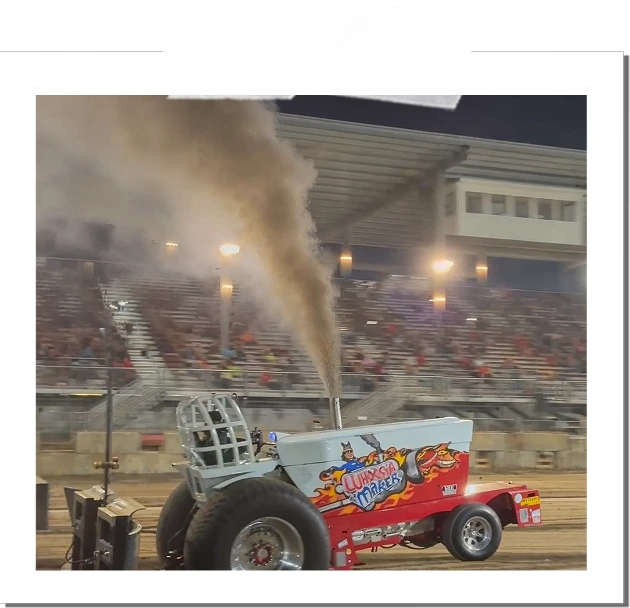
Demo derbies, rodeos, and truck and tractor pulls are the grandstand events fairs most often put on—and between 40% and 60% of fairs that run these events rate them as having strong or very strong results for drawing crowds. Other events reporting strong results included rough trucks, motocross, and monster truck shows.
Concerts, on the other hand, are tough. Big name concerts are hard to make profitable, and it's harder to bring in crowds with up-and-coming or cover band talent. Action-packed, participatory events tend to outperform concerts when it comes to driving gate attendance.
Year-Round Fairground Monetization
Many fairgrounds are also looking beyond fair season to generate revenue year-round. RV and boat storage is the most profitable way to monetize fairground property outside of the fair itself, with 85% of fairs offering it reporting profitability. Other profitable opportunities include horse shows, stall rentals, auctions, and flea markets. Community events and weddings also show strong profitability potential.
The Human Factor: Change Readiness
Even the best strategies won't work without buy-in from fair boards and leadership. Fair boards are most resistant to changes in event programming and pricing strategies. They are least resistant to change in areas of marketing and advertising.
This is actually good news. The areas where change is easiest to implement—marketing and advertising—also happen to be the areas where the data shows the most opportunity for improvement. Starting with marketing changes can build confidence and momentum for bigger shifts in pricing and programming down the road.
Key Takeaways
If you want to grow your fair, here's what the data says to pay attention to:
- Pricing: Low pricing may not be the only answer. Pair your pricing with smart promotions to drive sales.
- Promotions: Early bird specials, flash sales, online discounts, and multi-day passes are the most effective. Using 2 to 3 together tends to drive the best results.
- Advertising: Paid and organic social drive results over other channels and are the most cost-effective when done right. Print, mail, and TV probably should not be the majority of your advertising budget.
The world is changing faster every day. Growth will come to those who adapt.
This post is based on data from the Fairs.com Industry Survey. Fairs.com currently serves over 150 fairs and fairground events across the US.
.png)


Are you ready to unlock the full potential of your fair with Fairs.com?
Speak with one of our experts to get started today.